Tata Talents — an AI-assisted
recruitment platform
A recruitment SaaS built for KST to run hiring end to end — job requests, ads, candidate intake, an interview pipeline, and analytics. AI reads each CV and auto-fills the form (cutting manual entry ~80%) and scores it for ATS-friendliness, while sensitive candidate data is protected with envelope encryption and handled in line with Indonesia’s UU PDP. I led it as Tech Lead.
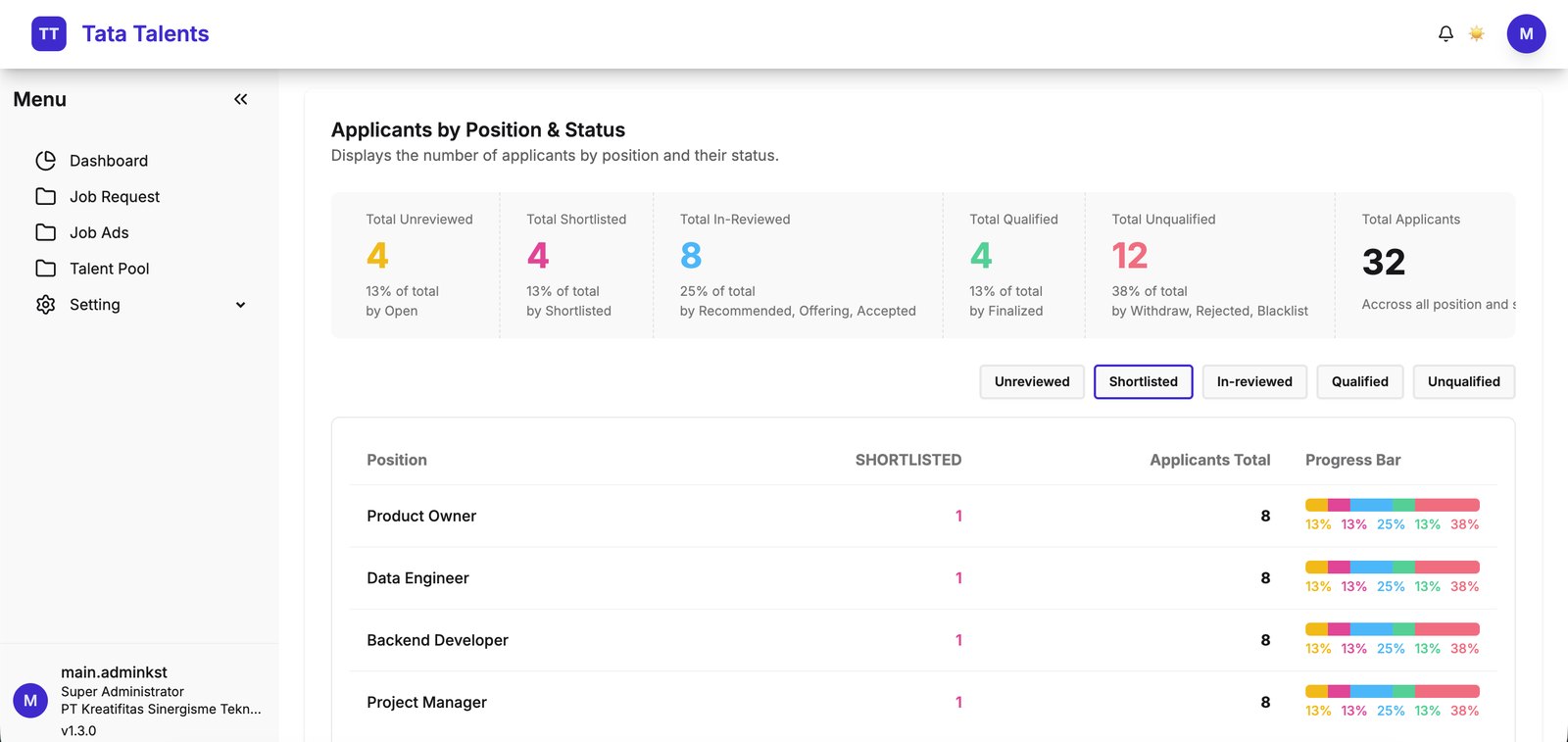
Recruiting is data entry — and the data is sensitive.
Hiring runs on candidate data: CVs, contact details, expected salary, interview notes. Entering all of it by hand is slow and error-prone — and every field is sensitive personal data that has to be protected, not just stored.
Tata Talents is the recruitment platform I built for KST to run the whole funnel: raise a job request, publish a job ad, intake candidates into a talent pool, move them through an interview pipeline, and read analytics on sources, salary, and status — all in one place.
I led it as Tech Lead, owning the architecture, the AI pipeline, and the security model end to end.
at a glance
From job request to hire.
The core hiring loop. Tap any to enlarge.
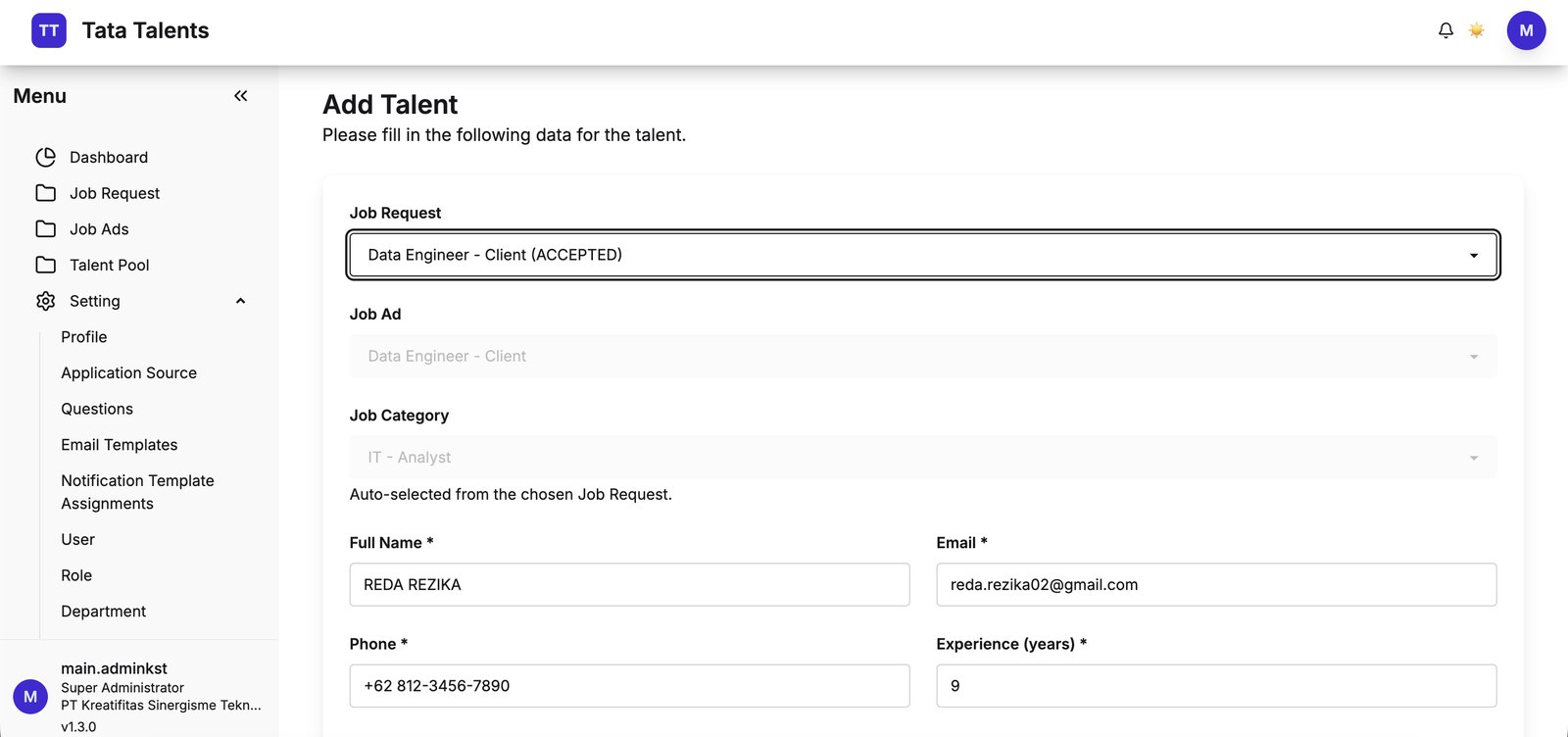
Candidate intake. A new talent is tied to an accepted job request — the job ad and category auto-fill from it — then captures the candidate’s details, location, and CV. One consistent entry point into the talent pool.
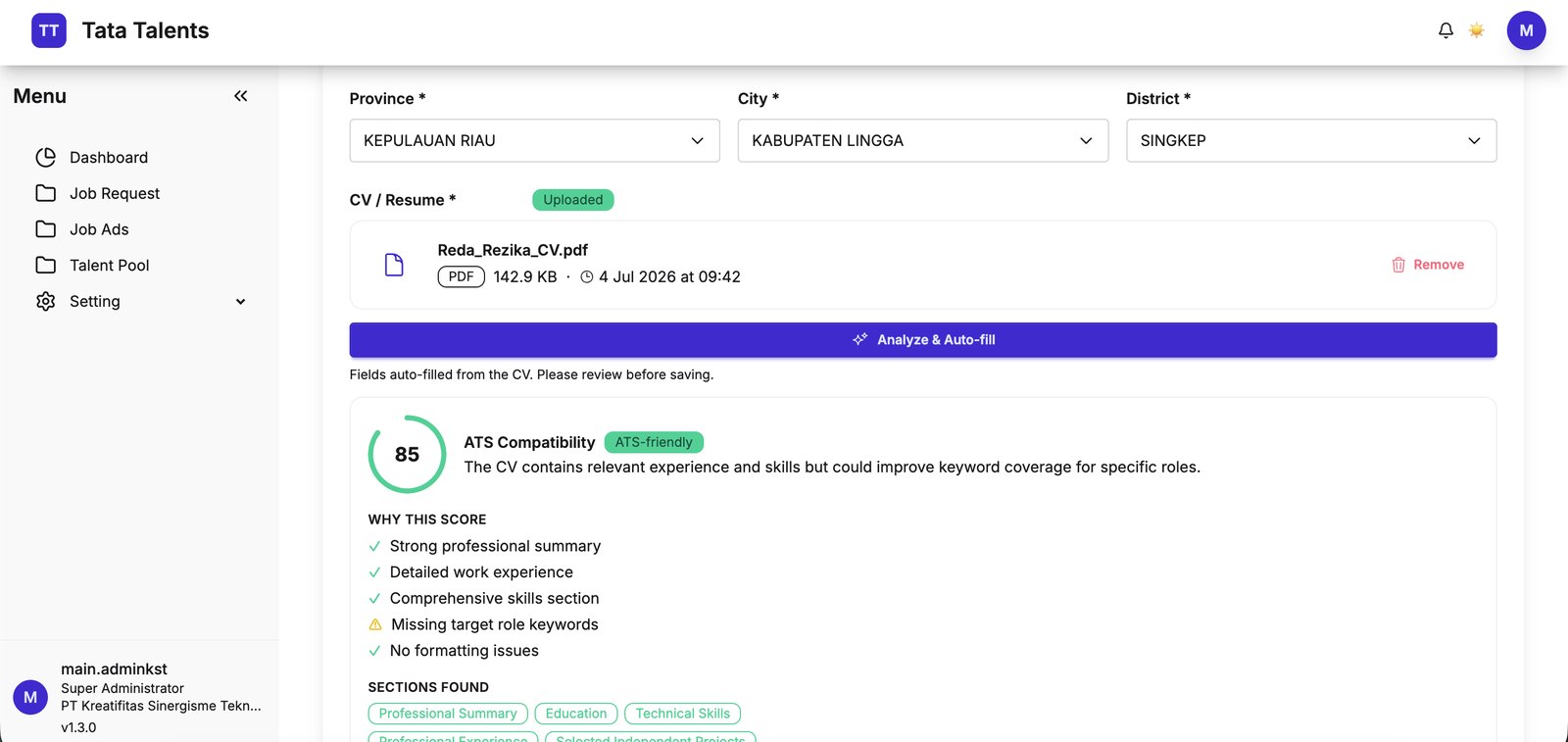
AI CV Autofill + ATS score. Upload a CV and Analyze & Auto-fill reads the PDF, fills the form fields, and returns an ATS-compatibility score with reasons and the sections it detected — turning minutes of typing into a quick review-and-confirm. Roughly 80% less manual entry.
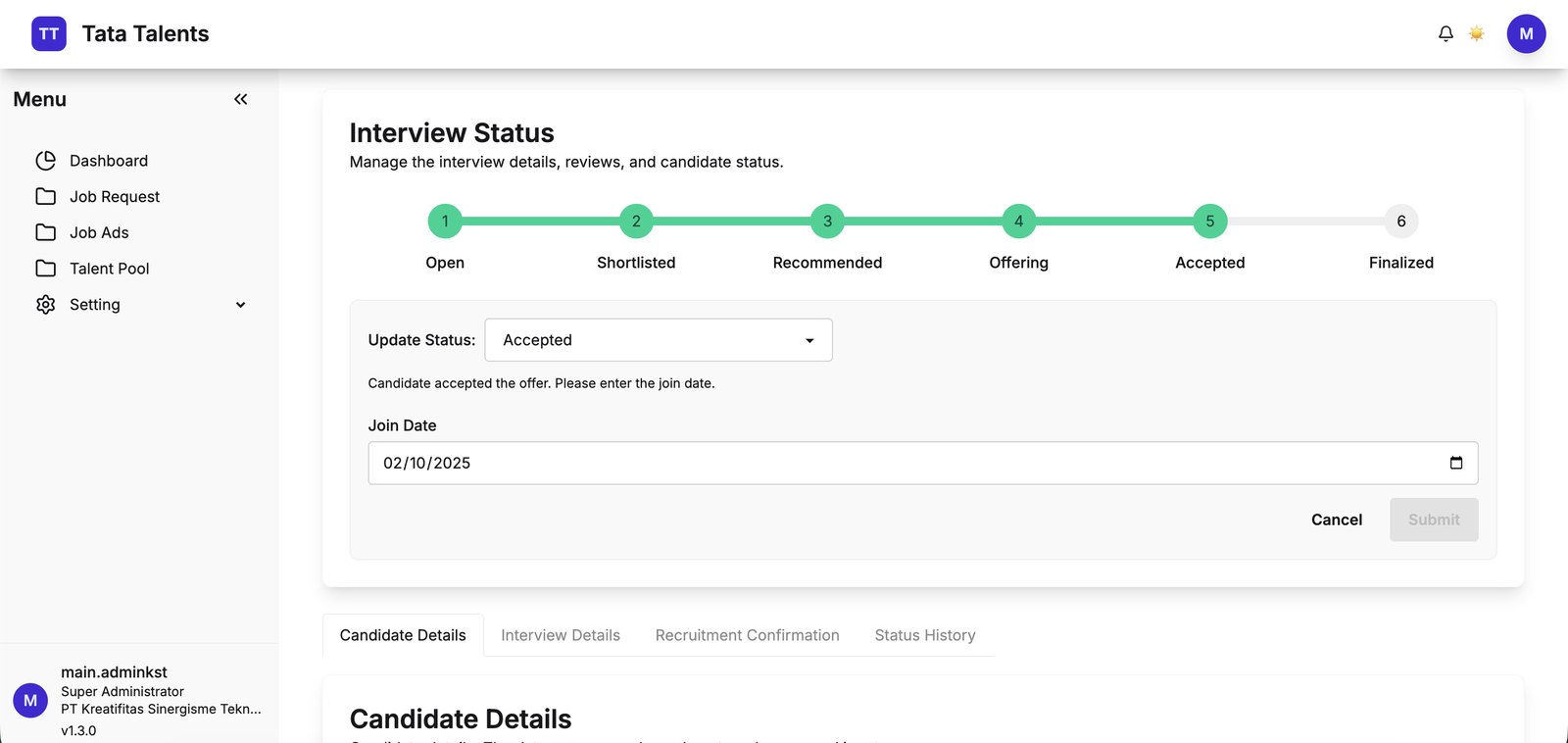
Interview pipeline. A six-stage flow — Open → Shortlisted → Recommended → Offering → Accepted → Finalized — with contextual actions per stage (an accepted offer asks for a join date), tabbed candidate / interview / confirmation details, and full status history.
The reporting behind hiring.
Analytics that make recruiting decisions data-driven.
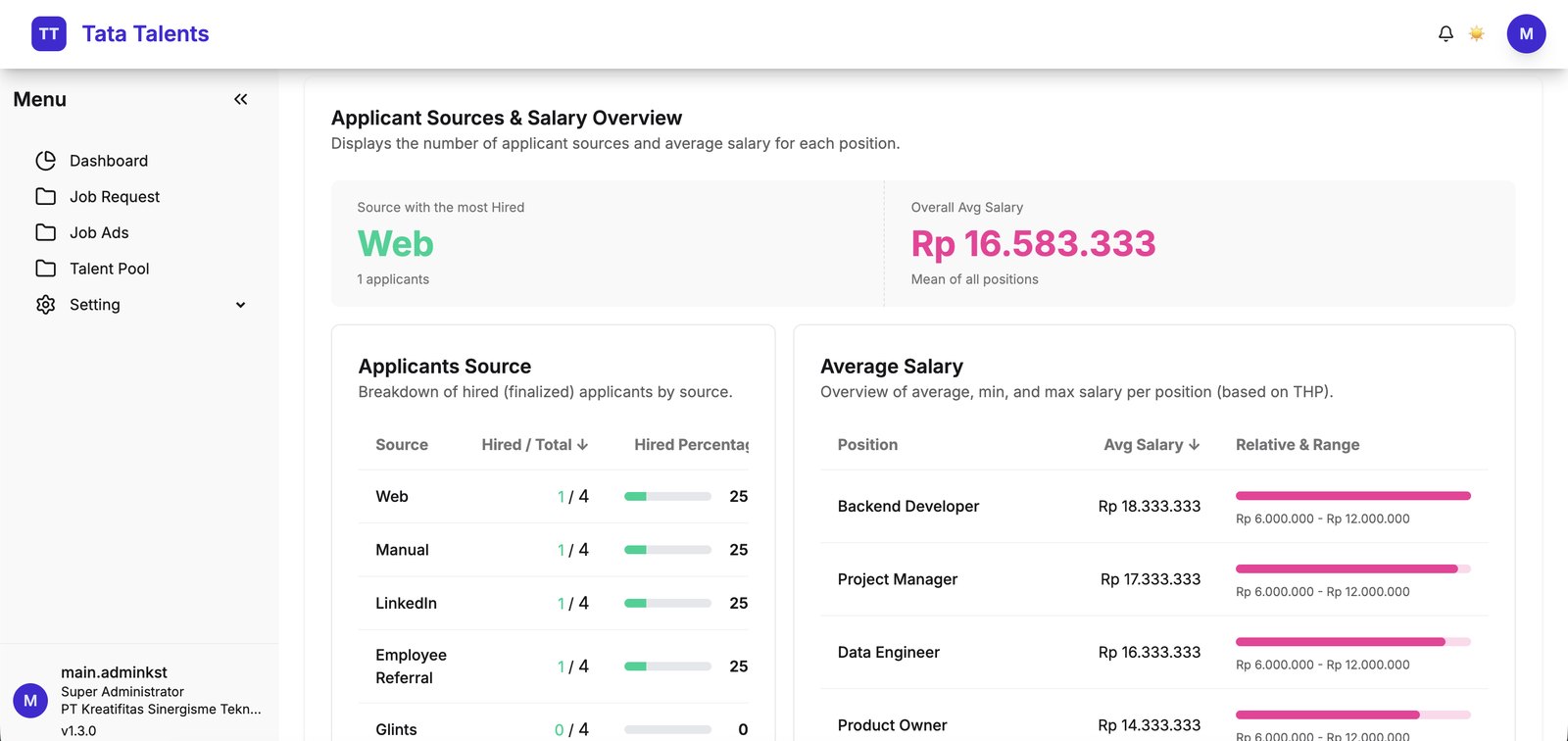
Sources & salary overview. Which channels actually convert to hires (Web, LinkedIn, referrals, Glints) and what each role costs — average, min, and max salary per position — so recruiting spend and offers are grounded in the platform’s own data.
AI where it saves time, encryption where it matters.
The two hard problems here are reading messy CVs and protecting personal data — the rest is a clean, fast stack.
AI CV Autofill
A CV PDF is parsed by an LLM (GPT-4o-mini) into structured fields — name, contact, experience, skills — cutting manual data entry by roughly 80%. HR reviews and confirms instead of retyping.
ATS compatibility scoring
The same analysis grades the CV for ATS-friendliness — a 0–100 score with reasons (strong summary, missing keywords) and the sections it detected — so recruiters can flag weak CVs early.
Envelope encryption
Candidate files use client-side envelope encryption: a data key encrypts the file and Azure Key Vault wraps that key, with the unwrapped key cached briefly (15-min TTL) to stay fast.
GCS document vault
CVs live in Google Cloud Storage, never publicly exposed — access flows through signed-URL proxying, so a file is only reachable by an authorized request, for a limited window.
UU PDP alignment
Because every record is sensitive PII, the data model and access paths were designed around Indonesia’s UU PDP — deliberate handling of candidate data, not an afterthought.
Bun + Hono + Svelte
A fast TypeScript stack: a Bun / Hono API, Drizzle over MySQL for typed queries, and a Svelte front end — light, quick, and easy to iterate as Tech Lead.